
Blog
Will a New Roof Include Replacing Damaged Timbers and Battens?
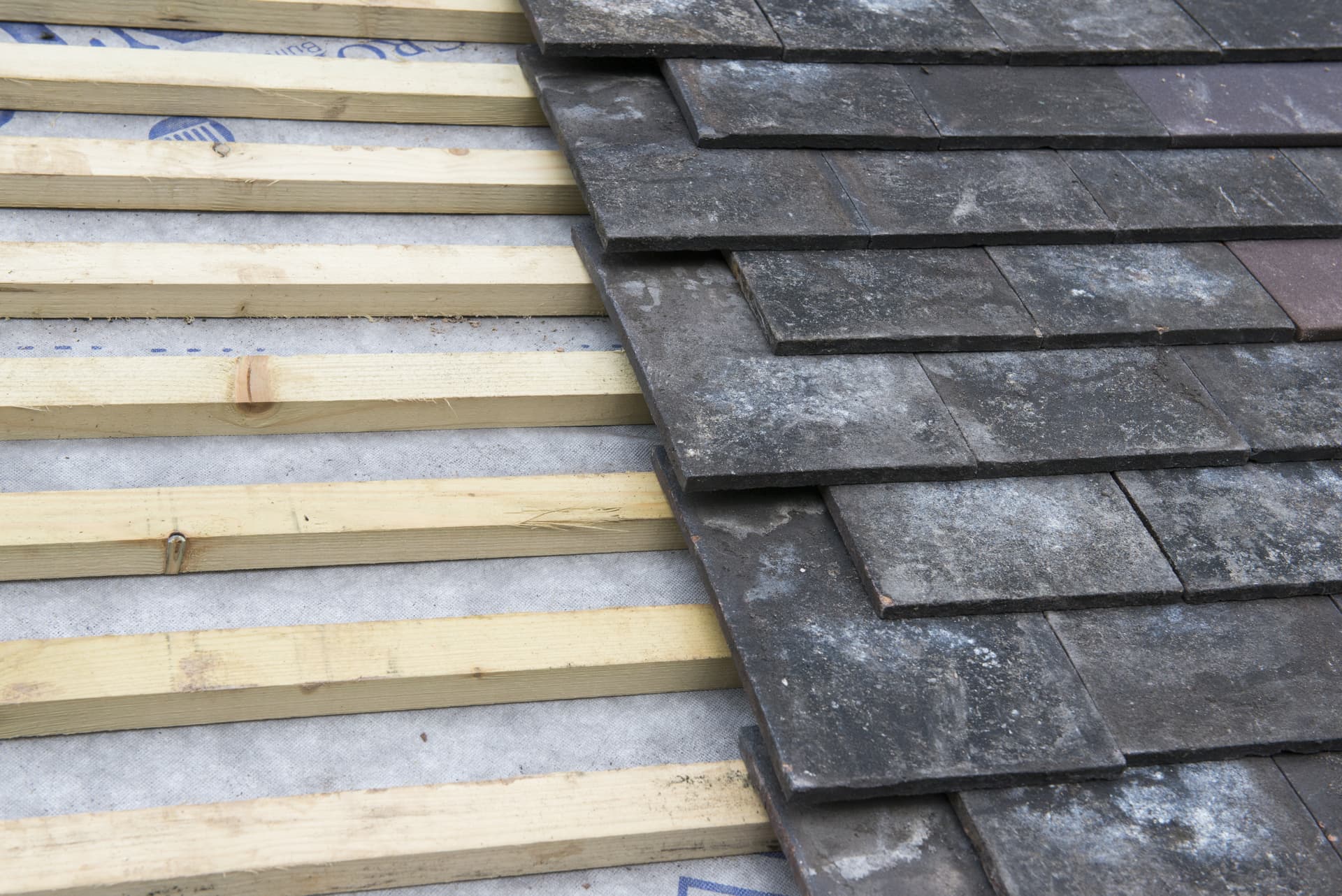
Will a new roof include replacing damaged timbers and battens?
A new roof is not simply a case of placing fresh tiles or slates over the top. The covering is only one part of the roof system. Beneath it, the battens, membrane and supporting timbers all need to work together if the finished roof is to shed water, carry its own weight and remain secure.
That is why the condition of the roof structure cannot be confirmed properly from ground level. On a property in Brentwood, Harlow or elsewhere across Essex, we need to remove the existing covering before we can inspect the parts that have been hidden for years. Our New Roofs service includes this preparation as part of the installation process.
What battens do beneath the tiles
Roof battens are the horizontal lengths of timber fixed across the rafters. Tiles or slates are secured to them, so they control the spacing and support of the roof covering. If a batten has weakened, split, twisted or suffered decay, the issue is not merely cosmetic. The fixing may no longer hold as it should, and the covering may sit unevenly or become more vulnerable to movement.
Older battens can also be affected by prolonged moisture. Water may enter through a damaged tile, defective leadwork or an ageing roof junction, then remain against the timber. A batten can look acceptable from below while being soft or compromised where the fixings pass through it.
During a new roof installation, we inspect the battens once the old covering has been stripped. Defective sections are removed and replaced before the new covering is fitted. This gives the tiles or slates a sound, properly aligned base rather than leaving a hidden weakness beneath an otherwise new roof.
Why the supporting timbers need a separate check
Battens are not the same as the structural timbers supporting the roof. Rafters and other timber members form the framework that carries the roof load and transfers it into the building. Their condition affects more than the appearance of the finished covering.
Problems can develop where moisture has entered around roof edges, valleys, chimneys or junctions. Poor ventilation and long-term damp can also contribute to timber deterioration. In some cases, the evidence is visible as staining or distortion. In others, the affected area only becomes clear after the roof covering and underlay have been removed.
We check the exposed timbers for signs of decay, softness, distortion and damage. The important point is that replacement should be based on the condition found on site, not on assumptions made before the roof is opened up. Sound timber should not need unnecessary replacement, while damaged timber should not be covered over simply to keep the work moving.
What happens while the old roof is removed and prepared
We begin by removing the existing roof covering in a controlled way. This exposes the battens and the underlying roof structure, allowing us to assess the roof from above rather than relying only on an internal inspection.
If defective battens are found, we take them out and install suitable replacements. If a structural timber requires attention, we deal with that before the new roof system is completed. The extent of any work depends on what the roof reveals, including the location of the damage and whether it affects the surrounding framework.
Once the underlying structure is ready, we prepare the roof for the new membrane and covering. This stage matters because the membrane helps manage water that gets beneath the outer covering, while the battens provide the fixing and layout for the tiles or slates. A new roof performs as a system, not as a collection of separate materials.
What you should ask before work starts
Before accepting a quote, ask how the roof structure will be inspected once the existing covering is removed. You should also ask how any additional timber or batten work will be identified and agreed if hidden defects are uncovered.
A clear explanation should distinguish between routine preparation and repairs that become necessary because of the roof's condition. It should also explain how the work will affect the planned materials, roofline and completion process. This avoids confusion when the roof looks different underneath than it did from the ground.
For period cottages, semi detached homes and newer properties, the details can differ considerably. The roof design, previous repairs, type of covering and exposure to moisture all influence what we find. We assess the actual roof rather than treating every property as identical.
At B.Short Roofing, we carry out new roof installations across Brentwood, Harlow, Shenfield, Ingatestone, Billericay, Romford, Chelmsford and surrounding areas. As a Checkatrade business, we focus on careful preparation as well as the visible finish. If you are considering a new roof, contact us to arrange a site assessment and a clear quotation based on the condition of your property.